In modern manufacturing, few tools are as fundamental as the mold. Often referred to as the “Mother of Industry,” molds are the invisible backbone behind nearly every mass-produced product we use daily — from the keyboard you type on to the engine cover of your car. But what exactly is a mold, how does it work, and why is it so critical to industrial production? In this article, we break down the essentials every buyer and engineer should know.
What Is a Mold?
A mold is a specialized tool used in industrial production to shape materials through processes such as injection molding, blow molding, extrusion, die casting, forging, smelting, and stamping. Simply put, a mold is the template from which a finished product is formed.
Each mold is composed of various precision components, and different molds consist of different parts depending on the product being manufactured. The core principle is straightforward: by changing the physical state of the molding material — typically from liquid or softened to solid — the mold imparts the desired shape to the final product.
Why Is Mold Called the “Mother of Industry”?
The title is well earned. Without molds, mass production as we know it would not exist. Consider this: a single automobile requires over 20,000 different molds to produce its various components — from interior trim and dashboard panels to engine covers and exterior body parts.
Everyday items that rely on plastic injection molding include computers, telephones, fax machines, keyboards, cups, and countless household appliances. Any product produced in volume depends on a mold. This is why the mold manufacturing industry sits at the foundation of the entire manufacturing supply chain.
Types of Molds
Molds can be classified in two primary ways: by the material being processed and by structural characteristics.
1. By Processing Material
- Metal Processing Molds — Used for shaping metals through die casting, forging, and stamping. These die casting molds must withstand extreme temperatures and pressures, making material selection for mold inserts critical.
- Non-Metal & Powder Metallurgy Molds — This broad category includes:
- Plastic Molds — The most common type, including two-shot molds, compression molds, and extrusion molds.
- Rubber Molds — For shaping elastomeric materials.
- Powder Metallurgy Molds — For compacting metal powders into solid forms.
2. By Structural Characteristics
- Flat Blanking Dies — Used for cutting flat shapes from sheet material. These are typically simpler in structure but require extreme precision machining to maintain clean edges and tight tolerances.
- Cavity Molds — Three-dimensional molds with enclosed cavities that define the product’s shape. Injection molds fall into this category and represent the most complex and widely used mold type globally.
It’s worth noting that molds are generally produced as single-unit or small-batch items. Unlike the products they create, each mold is essentially a custom-engineered tool — designed, machined, and validated for one specific application. This is why precision mold manufacturing demands such high technical expertise and specialized equipment.
How Is a Mold Made? The Production Process
A mold may be the tool that creates products, but how is the mold itself produced? The process is far more complex than most people realize. Here is an overview of the key stages:
- Design & Engineering — Based on the product’s 3D model (preferably in STEP format), mold designers determine the parting line, gate locations, cooling channels, and ejection system. This stage directly impacts product quality and production efficiency.
- Material Selection — SKD61, VIKING, and 8407 are common steel grades for mold inserts, each offering different balances of hardness, toughness, and thermal resistance.
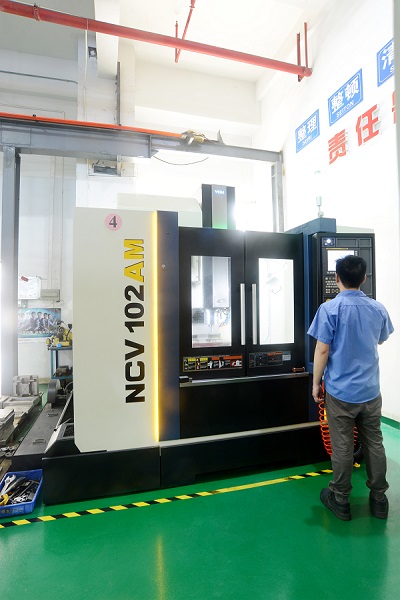
- CNC Machining — High-precision CNC milling, EDM (Electrical Discharge Machining), and wire cutting shape the cavity and core to exact specifications.
- Assembly & Fitting — All components are assembled, aligned, and hand-fitted to ensure proper clearance and movement.
- Trial Run (T1) — The completed mold is mounted on an injection molding machine for a test shot. Samples are inspected for dimensional accuracy, surface finish, and structural integrity.
- Modification & Optimization — Based on T1 results, adjustments are made to dimensions, gates, or cooling. Additional trials (T2, T3) follow until the product meets specification.
- Mass Production — The approved mold enters production, capable of producing thousands to millions of identical parts.
Why Mold Quality Matters
A poorly made mold doesn’t just produce defective parts — it creates compounding costs: frequent maintenance, production downtime, material waste, and delivery delays. Investing in quality precision mold manufacturing from the start pays for itself many times over in production efficiency and product consistency.
Key factors that determine mold quality include:
- Steel grade selection — Choosing the right tool steel for mold inserts based on production volume, resin type, and operating temperature.
- Machining precision — Tight tolerances ensure consistent part dimensions across millions of cycles.
- Cooling design — Efficient cooling channels reduce cycle time and prevent warpage.
- Surface finish — Proper polishing and texturing improve part appearance and release performance.
Need a Custom Mold? Let’s Talk
Whether you need a single-cavity prototype mold or a multi-cavity production tool, the key is working with a manufacturer who understands both the engineering and the economics. For a more precise quotation, send your drawings (STEP format preferred) to info@moldtechpro.com — our engineering team will respond with a detailed proposal.